
Why Psychodynamic at Insight?
How Psychologists Really Learn

Becoming the Psychologist You Want to Be
Becoming an excellent psychologist is about much more than acquiring knowledge or demonstrating professional competencies. It is a gradual process of learning how to think within a relationship, to listen without rushing to conclusions, and to stay curious even when it’s uncomfortable. Essentially, we see this process as “thinking together”.
Over many years of clinical practice, supervision, teaching and research, we have come to believe that psychologists are shaped less by stand-alone workshops or techniques than by sustained engagement with patients, thoughtful supervision, careful reading, and ongoing reflection on our own clinical work.

Learning Beyond Competence
Meeting the professional competencies set out by the Psychology Board of Australia is essential — they underpin safe, ethical, and effective practice. Yet competencies alone cannot capture the qualities that distinguish an experienced clinician: sound judgement and the flexibility to think creatively when no treatment manual quite fits the person sitting in front of us.
We believe that becoming an effective psychologist involves developing not only what you know, but who you become as a clinician. Technical skills provide the foundation; reflective practice transforms those skills into thoughtful therapeutic work.
This is why Insight is not a generalist, competency-focused program. It exists for psychologists who want to think psychodynamically about the people they work with.
Our hope is that people leave with a clearer sense of the psychologist they want to be — confidence and knowledge tend to follow that, not the other way around.

Human Subjectivity
Every person who seeks therapy brings a unique inner world shaped by relationships, culture, development, loss, hope, conflict and meaning. Our task is not simply to identify symptoms or assign diagnoses, but to understand how these particular individuals experience themselves and the world around them.
This commitment to prioritising human subjectivity may be seen as central within a contemporary psychodynamic psychotherapeutic framework. This orientation invites a different question than 'what disorder is this' — namely, who is this person, and how have they come to experience life this way?
We think this perspective makes every therapeutic approach better. An understanding of the person’s inner world doesn't sit apart from evidence-based practice — it's what lets a clinician actually use that evidence well, with judgement, and with the person in front of them in mind.

Contemporary Relational Psychodynamic Psychotherapy
Our teaching is informed by contemporary relational psychodynamic psychotherapy. We encourage psychologists to think deeply about unconscious processes, relationships, and emotional life — techniques alone don't get you there. In this way, psychodynamic thinking becomes less a set of interventions than a way of understanding people.
Why Supervision Matters
If there is one place where psychologists truly learn, it is in supervision.
Good supervision is not simply a review of cases or a discussion of treatment plans. It is a protected space for careful thinking. It allows us to slow down, examine our assumptions, recognise our emotional responses, and remain open to alternative ways of understanding the people with whom we work.
Over time, supervision becomes more than professional oversight. It becomes a way of cultivating clinical judgement and the humility to stay reflective even in the most challenging clinical situations.
Group supervision is a core process lying at the centre of our teaching seminars, where much of the learning comes as much from fellow participants as from the supervisor.
The Importance of Reading
Psychotherapy has always been sustained by thoughtful scholarship.
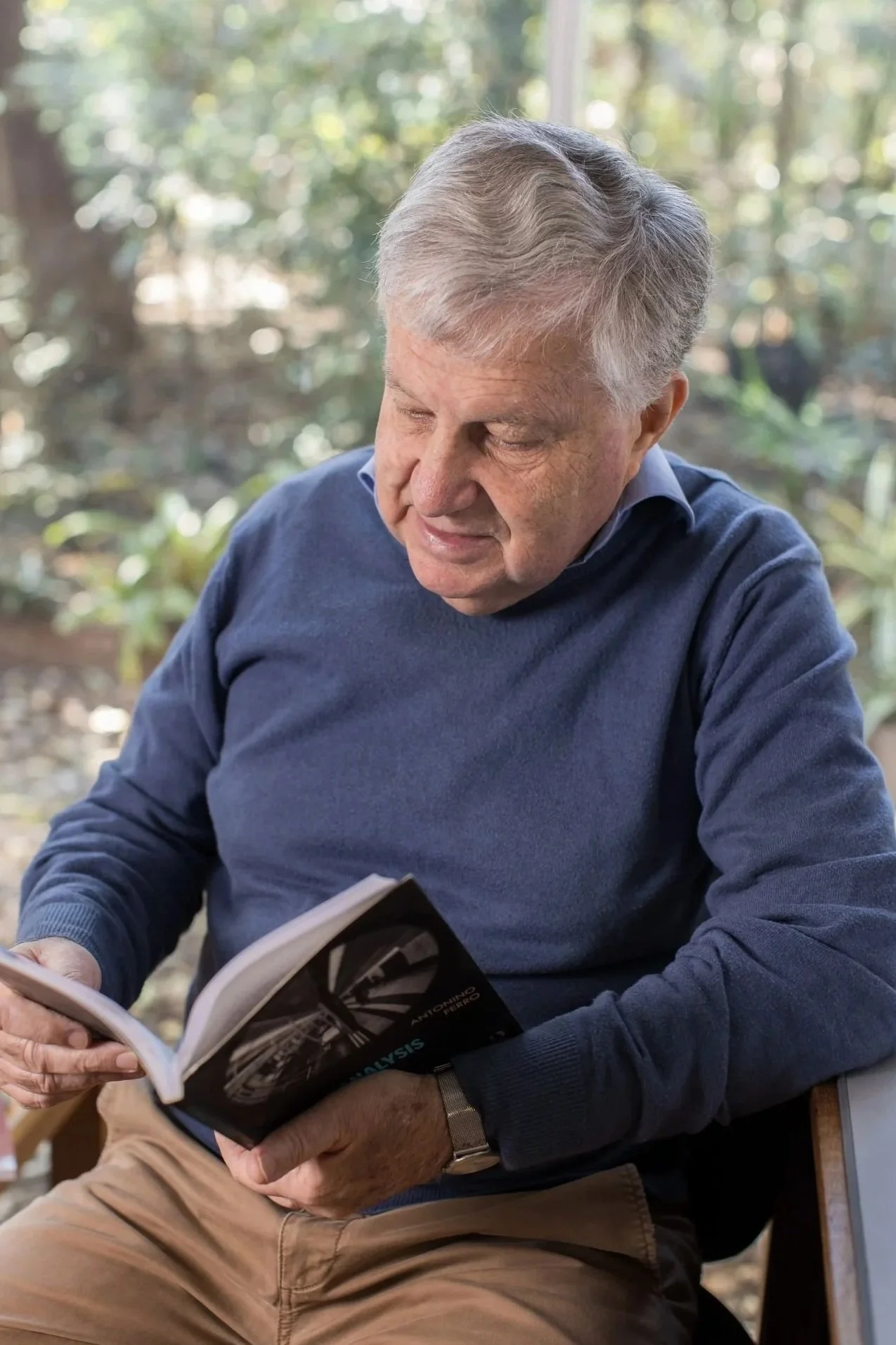
Some of the most influential clinicians have also been careful readers, recognising that theory does not replace experience but helps us think more deeply about our work. Reading Winnicott, Ogden, McWilliams, Barsness, Gabbard, Mitchell, Bromberg, Ferro, Lysaker and many others invites us into an ongoing conversation that spans generations of clinicians committed to understanding the complexities of psychological life.
Within Insight, reading is not an academic exercise undertaken for its own sake. Rather, the weekly reading provides a language through which clinical experience can be explored, questioned and refined. Ideas become meaningful when they enable us to make sense of the people we meet in our consulting rooms.

Learning to Live with Ambiguity
One of the greatest challenges in psychological practice is learning to tolerate uncertainty.
Clinical work rarely unfolds in predictable ways. Patients do not always respond as expected, formulations evolve over time, and therapists often encounter moments when there is no immediately obvious course of action. It's probably at these times that early career therapists feel the need to “do something”.
We’d rather a psychologist stay curious than reach for premature certainty. The capacity to think carefully in the face of ambiguity is, in our experience, one of the defining characteristics of psychodynamic-informed clinical practice.
Developing a Therapeutic Identity
Perhaps the most enduring outcome of professional training isn’t a collection of techniques — it’s the gradual development of a therapeutic identity.
Every psychologist eventually discovers that effective therapy reflects something deeply personal. It emerges from the integration of knowledge, experience, values, relationships, and ongoing self-reflection. It is shaped through years of practice, supervision, reading, and thoughtful dialogue with colleagues.
Our hope is that people leave with a clearer sense of the psychologist they want to be — confidence and knowledge tend to follow that, not the other way around.
An Invitation
Whether you are beginning your registrar pathway, seeking advanced professional development, or simply looking for a richer way of thinking about psychotherapy, we invite you to join a community committed to thoughtful clinical practice and a genuine curiosity that doesn’t stop at graduation.